PIXEL
PIXEL
4.5 / 5
•
Steam listing data
One card, two fates. Flip between Yin and Yang faces to change both cost and effect, read enemy intents, and turn defense, setup, and burst into one decisive se
Shanhai Exorcist: Yin-Yang Chronicles is available on Steam from Wu Qing Ying. It is a Windows turn-based roguelike deckbuilder based on Chinese mythology, with cards that can flip between Yin and Yang faces.
Data note: This is a source-based release tracker, not a hands-on PFN review. Details below are based on Steam listing information captured in the original PFN article. Price, discounts, features, and platform support can change.
Quick Facts
| Game | Shanhai Exorcist: Yin-Yang Chronicles |
|---|---|
| Developer | Wu Qing Ying |
| Publisher | Wu Qing Ying |
| Steam App ID | 4986290 |
| Release date | 12 August 2026 |
| Platform | Windows |
| Genres | Casual, Indie, Strategy |
| Listed price in source article | $8.99 / RM14.52 during a 30% launch discount |
| Notable features | single-player, Family Sharing, dual-faced cards, enemy intent reading, four schools, English/Simplified Chinese/Traditional Chinese support |
Trailer And Screenshots
Every card has two faces
The defining system is dual-faced cards. Each card carries a Yin face and a Yang face, with different costs and different effects, and you can flip a card to switch which one is active.
The consequence is that your deck is never fixed in function. A defensive card can be flipped into an attack. A setup card can be flipped into a payoff. Wu Qing Ying frames the goal as finding the sequence that turns a dangerous round into a decisive finish, which means deck construction is less about drawing the right card and more about recognising what the cards you already hold could become.
Two resources govern the flipping. You manage a Taiji state and Qi to shape each turn, so flipping is a budgeted decision rather than a free toggle.


What Shanhai Exorcist Is
The central mechanic is dual-faced cards. Each card has a Yin side and a Yang side, with different costs and effects. Players can flip cards, but the source article describes Taiji state and Qi as resources that make flipping a budgeted decision.
That gives the game a useful identity in a crowded deckbuilder space. Instead of only asking which card to play, the game asks which version of the card the current turn needs.
Schools And Combat Flow
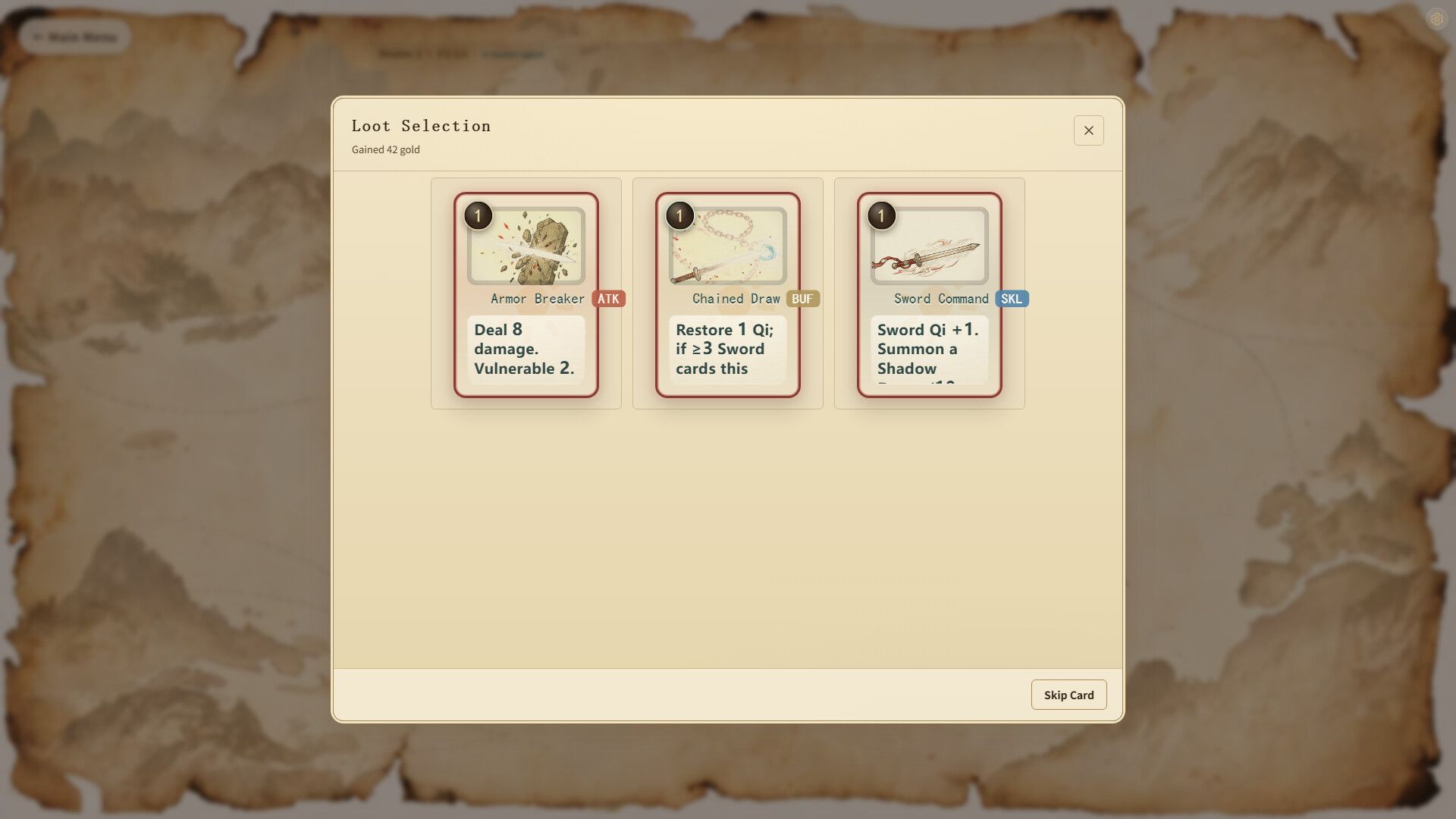
The source article lists four schools: Sword Cultivator, Five Phases, Summoner, and Karma. Each appears to use a different resource or sequencing idea, such as Sword Intent, elemental Seals, familiars, or cause-and-effect tracking.
Combat is described as turn-based and built around enemy intent. That means players read what enemies are preparing, then decide whether to defend, set up, or push for damage.
Reader Notes Before Buying
The source article lists this as a Windows-only, single-player release with Family Sharing. Steam Achievements, Steam Cloud, and controller support were not listed in the captured source, so readers should verify the current Steam page if those features matter.
Deckbuilder players should also check current reviews for translation quality, school balance, and whether the card-flipping system remains interesting across multiple runs.
PFN Bottom Line
Shanhai Exorcist: Yin-Yang Chronicles has a concrete mechanical hook: cards with two functional faces and schools built around different resource loops. PFN is treating this as a release tracker until hands-on testing can confirm balance, readability, and run variety.
Source And Disclosure
This article is based on publicly available Steam and launch information captured in the original PFN article. PixelForge Network may use affiliate links, but this tracker should not be read as a hands-on review or scored verdict.
This article may contain affiliate links to affiliate partners. PixelForge Network may earn a commission at no extra cost to you, which helps support our independent gaming coverage. Read our full disclosure.